



What Happens If You Stop Doing Water Changes in a Shrimp Tank?
Water changes are a must for keeping our shrimp tank healthy. We have to do water changes; otherwise, our shrimp will die. So, what if we didn't do water changes? Would it really hurt our shrimp?

What Are Water Changes?
Water changes are the process of removing some water from our aquariums. Typically, you remove between 10 and 50 percent of the water and replace that with whatever your source may be that suits the livestock in your tank.
Why Stability Matters for Shrimp
Shrimp love stability; as shrimp hobbyists, we should strive for stability before perfection. It’s because when we're constantly making changes, that can be deadly to our shrimp. But when we can get the water parameters stable, even when it isn’t perfect, we typically find our shrimp thrive.
Why Do We Need Water Changes?
So why do we need to change water in the first place? Well, this is all to do with the nitrogen cycle.
We need to change water because of the nitrogen cycle. Shrimp and fish waste has a lot of ammonia, which's very bad for them. Luckily there are bacteria in the tank that turn ammonia into nitrite, which is still bad but not as bad as ammonia. These bacteria then turn nitrite into nitrate, which's not as bad.
Why Nitrates Build Up
The reality is there is no way for the bacteria to take nitrates up to nitrogen gas, which would then be released into the atmosphere.
There are filters; it is possible to set your tank up in a certain way so that that final step of the nitrogen cycle is completed, but regular filters don't provide the right conditions to fully complete the nitrogen cycle. So a tank will naturally build up nitrates, and if you did nothing, the nitrates will continue to build to the point where they become toxic to the fish.
Other Benefits of Water Changes
Water changes also help remove any hormones from your fish if you're keeping fish or any other elements that may be building up in the tank. And since shrimp want stability, they want their tank to be stable, and every time we carry out a water change, we don't just change the water. We might unintentionally kill the bacteria that's living on the glass, we might stir up the gravel and release other bacteria, or we could potentially release hydrogen sulfide gas. Disrupting the tank can be a real threat to the health of a shrimp.

The Role of Live Plants
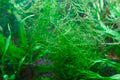
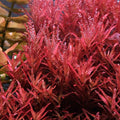
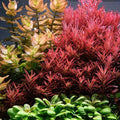
Live plants help keep the water clean by absorbing ammonia, nitrite, and nitrate as they grow. The faster the plant grows, typically the more ammonia, nitrite, and nitrate it absorbs as it grows.
Live aquarium plants are essentially nature's filter. As they grow, they're improving the quality of the water and sucking out many of the things that prove harmful to our shrimp.
For instance, if you want to grow some Anubias plants and it sprouts one new leaf once a month, that isn't going to absorb a great deal of nitrate from the water. Growing plants like water sprite or water wisteria is like nature's filter, making the water cleaner and healthier for shrimp.
Topping Off Water
Does water evaporate even in these tanks up here that have glass lids? Yes, it does.
Could that be considered a water change? Yes, it could.
But if you didn't top off, you would eventually end up with no water and no shrimp.
So topping off is essential; otherwise, the water level just continues to drop at all times.
Should You Stop Doing Water Changes?
It doesn't necessarily mean that you should stop doing water changes; if water changes are working for you, stick with them.
Take your time. Keep an eye on your shrimp. If you start to see ill effects, if your shrimp start to lose color, if they start to die for no reason, or if they seem to have stopped eating, then maybe you should go back to your water changes and try and work out what the problem was.